Thursday, October 25, 2007

A Night Of Remembrance

Since starting this blog, the night of October 31st has become much more meaningful to me than it had been before. Sure, I knew about the secular meaning (from being an avid trick-or-treater back in the day) and some of the religious connotations (from my interest in various religions), and I have also learned a lot from what other Pagan bloggers have had to say regarding what the day means to them in both a personal and religious sense.

But even though I understood what had been written about and discussed, I now realize that I didn't have a full grasp on the feeling behind the day.

This year is different.

I will now know have an understanding of Samhain as a night of remembrance. There are three people that have been heavy on my mind this year. Within two weeks of returning from England and Germany, three people within my circles of family and friends passed away.

  • One, a friend's child, a long awaited pregnancy. While we had not met the child yet to come, we felt the loss within my circle of friends. We all grieved with the parents and tried to support them in their time of need.
  • Another, a second friend's child, who had been struggling with health issues since birth. It was both a day of sadness and of relief (as we kept in mind that the child would no longer be suffering).
  • The last, a close relative, who had lived a long life and was the only one left of her generation within our family. Her smiling face and sassy quips will be missed as the holiday season comes closer.

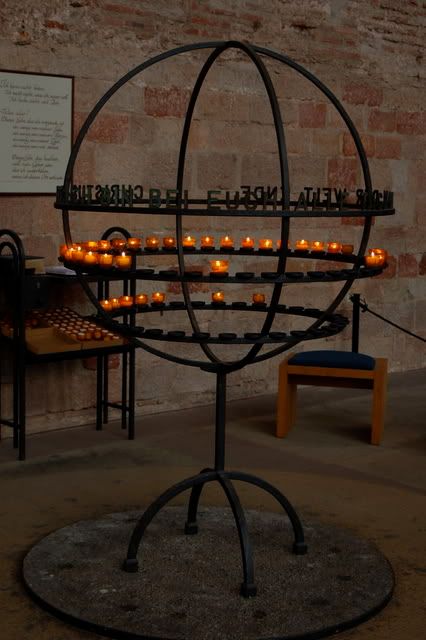
These are the three people that I will keep in mind this coming Samhain night. These are the three people to whom candles will be lit in remembrance. These are three people who will serve as reminders of what is important to me.

Wednesday, August 08, 2007

Sitting By The Falls

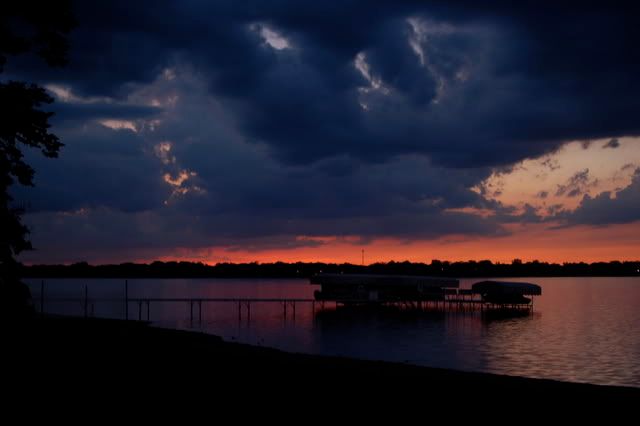
Still out by the water.....

Friday, July 20, 2007

By The Water

Living in Minnesota gives me the opportunity for all sorts of outdoor experiences, especially when it comes to water. Minnesota is the "land of 10,000 lakes" after all. But its not only the lakes that are a draw for me.

I love hiking along the rivers, streams and creeks that feed into Lake Superior along the North Shore. The rushing rapids of the rivers and the crashing waterfalls contrasts with the quiet views of Lake Superior that come from the tops of the Sawtooth Mountains. (You didn't know that Minnesota has mountains, did you? Not huge, mind you, but there they are.)

Spending the last couple of days along the North Shore made me realize how much I miss living near so much water. It also made me realize that this summer's focus has been about being outdoors - camping at Gettysburg, hiking in the Shenandoah Mountains, kayaking, visiting the ocean, and of course hiking the waterways of the North Shore.

I've gotten a few emails and comments asking where I've been. With the wonderful weather lately, it has been hard to sit down and write when I have the opportunity to be outside. So, as long as the weather is great, I'll be out by the water.

Monday, July 02, 2007

On The Road Again

I've been recruited to be a part of the Gettysburg battle reenactment this coming up weekend for Forth of July, so I'm on the road again.

Camping on the battlefield of Gettysburg? How could I pass up that opportunity!

Heading to Pennsylvania......

Have a safe and happy 4th everyone!

Thursday, June 21, 2007

Solstice Sunset

Happy Summer Solstice to all who celebrate the day!

As I sat on the shores of one of Minnesota's lakes tonight watching the sunset at the end of a wonderful summer's day, I thought about some of the past Midsummer's Day that I could remember. I also found myself thinking about the traditions of summer solstice (due to my recent post regarding tradition and innovation), whether they are religious, personal, or regional.

When we think about traditions associated with this day, the longest in the northern hemisphere,* we may think about the first harvest, the height of a god's power, dancing, and watching the sunrise. What do I think about? Naked hiking.

Wait......... Naked hiking?

Yep. You read that correctly. Now let me tell you a little about it. Naked Hiking Day is a little tradition that is rumored to have started by thru-hikers on the Appalachian Trail to break up the boredom of the third month of hiking (with another three months to go). It is not uncommon to pass people on the AT on June 21st only to realize that they have nothing on but a pack, some boots and a smile.

When hiking the last few miles of the state of Virginia on this day five years ago, I came across a huge group of fellow thru-hikers that were hiking one behind the other. Because I was walking behind them, I didn't realize that they were all naked. It was only when I started to pass them that I realized that they had not a stitch on their bodies. As I started laughing, I was invited to join them.

So, to all those hikers out on the AT today who followed the tradition of hiking naked today, I hope yours was a great day (and I hope that you didn't get too sunburned). For those of you that are just learning about this tradition, there's always next year to join in on the fun.

________________
* In case you are wondering, you can go to timeanddate.com to find out how many hours/minutes/seconds of daylight you got in your location today. St. Paul, Minnesota had 15 hours 37 minutes and 8 seconds of daylight.

Sunday, June 17, 2007

Religious Tradition And Innovative Ideas

In their beginning, all traditions within a religion started as new ideas, or innovations, that helped to move the religion forward. But at what point do innovations become traditions? And how or why are they accepted by the participants of the religion? And does acceptance and adoption of innovations by groups equal success vs. individual adherence? There are so many questions that need to be looked at when discussing tradition and innovation.

Tradition And Innovation

When we think of traditions, we think of those rituals and rites that are a long standing part of our religious practice. Our traditions help to bring us comfort with their familiarity and help us to connect with others who believe as we do. We like the feeling that we are connected to our ancestors and communities through following the traditions that have been handed down to us.

When thinking of innovation, I think of change – either slight changes or something that brings about radical differences. Innovation comes about when someone suggests changes to a system that is currently in play, with the presented innovation taking the form of a new idea or even a new method of a tradition. While traditions can be considered the foundation of religion, innovations are the building blocks that help the religion grow up and out.

All religions focus on both tradition and innovations. Wade Roof (1998) implied that tradition and innovation are parts of the same process when he stated that “religious traditions are socially constructed, at times absorbing, other times resisting, influences within their environments; they are unfinished creations, always evolving, their boundaries drawn and redrawn to fit new circumstances.” [1] We need new ideas to help evolve the “creation.”

At what point do innovations become traditions?

The truth is that we all have boundaries when it comes to what we are willing to accept into our system of belief. When new ideas are presented, they sometimes cross the boundaries of what we consider acceptable.[2] (These boundaries can be on either a personal level or on a group level.) But when changes are accepted and brought into practice, the have the possibility of eventually becoming traditions.

I see the process of accepting innovations in religion as being somewhat akin to the acceptance of new paradigms in the sciences:

  • someone presents an idea
  • it tends to be rejected as it is in conflict or competition with a currently accepted paradigm
  • as more people voice their opinion on the new paradigm, the idea starts to root itself in the knowledge base of the field and more research is done either to find support or to discredit the new paradigm
  • if research is supportive, the idea slowly takes precedence over an older idea
  • new paradigm comes into acceptance

Tambey, Powell & Johnson (1989)[3] lay out similar guidelines on how religious innovation becomes accepted:

  • people are exposed to the innovation
  • the innovation must be accorded some level of legitimacy
  • successful innovation must have group that can experiment
  • there needs to be motivation to adopt the new idea

How/Why are Innovations Accepted by Participants

I like both the second and third points that Tambey, et al (1989) make in their research. Experimentation is an important part of the creative thought process of new ideas. Tambey, et al talk about how changes such as moving, going off to college or a new marriage can be times that allow for experimenting in regards to our religious beliefs. (While the research focuses on “religious nones” or the “unchurched,” I think that these ideas can be generalized to any religious change.)

Legitimacy also seems to play a part in the acceptance of a new idea. By saying that an innovation is legitimate, we are saying that there is some truth to it. But who gets to say what is legitimate? I’ve noticed that legitimacy tends to come from the social realm where the more people that except a new idea, the more legit it becomes. But ideas can have personal legitimacy as well.

Individuals Verses Groups

In a comment that I made on Erik's post regarding tradition and innovation, I had this to say about individual expression verses group expression: But what happens when what is reasonable for one person is not for someone else? Does that mean that the individual religious experience counts for less than what the group has to say? I’m thinking that there needs to be several levels or layers of religious experience and practice because each individual (and group) has preferences in how the innovations, or new ideas, are presented and adopted.

We live in an age that allows for more personal freedom when it comes to expressing our personal beliefs in regards to religion then any other age in history. We no longer need a religious authority to interpret religious writings and practices for us. Instead, we have the ability to read those texts and come to our own conclusions.

Why can’t there be both individual expression (which includes your personal traditions) and group expression within the same religious path? This is what I was referring to when I mentioned religions needing several layers.

In Conclusion

Does there need to be a war between innovation and tradition where we have to choose one over the other? No, because both innovation and tradition are needed to keep a religion alive. We need to find a balance between the two so that religion doesn’t become stagnant (weighed down by tradition) and so it doesn’t change too fast (because of too many new ideas).



[1] Roof, W. C., (1998). Religious borderlands: Challenges for future studies. Journal for the Scientific Study of Religion. 31(1). Pg. 5.

[2] Ideas of boundaries taken from: Roof, W. C., (1998). Religious borderlands: Challenges for future studies. Journal for the Scientific Study of Religion. 31(1): 1-14.

[3] Tambey, J.B., Powell, S. & Johnson, S., (1989). Innovation theory and religious nones. Journal for the Scientific Study of Religion. 28(2): pg. 216.